Garden Bird Uk

Garden Birds UK: The Practical Guide to Identifying and Attracting Common Garden Birds
If you’re seeing birds in the garden and thinking “what are they?” and “how can I help?”, you’re in the right place. In most UK gardens, you can identify the majority of visitors quickly by combining three clues: size (wren/robin/blackbird/pigeon), colour blocks (blue and yellow, black and white, plain brown), and behaviour (ground-hopping, feeder-acrobatics, lawn-probing). Once you can name what you’re seeing, it becomes much easier to support them: provide the right food, a reliable water source, and safe cover near feeding areas. Start today with one feeder, one clean water dish, and one “sheltered” spot—then build from there.
Quick-start checklist for UK garden birds
Want the fastest route to more garden birds in the UK? Use this simple, realistic setup plan. It’s designed for typical UK gardens (including small patios) and focuses on things birds actually respond to: steady food, fresh water, and places to drop into cover.
10-minute setup (do this today)
- Put out one feeder in a spot you can see, but not in the open: aim for 2–3 metres from shrubs or a hedge so birds can retreat quickly if startled.
- Add water: a shallow dish, bird bath or upturned plant-saucer on the ground is enough. Keep it stable and easy to clean.
- Create one safe “edge”: even a large pot with a dense shrub or climber on a trellis can provide cover if you don’t have a hedge.
1-week setup (make it reliable)
- Add a second feeding option to attract different species (for example: sunflower hearts plus suet, or a seed feeder plus mealworms).
- Start a simple cleaning routine: empty wet food, wipe perches, and refresh water regularly. Hygiene matters more than fancy equipment.
- Plant or position one bird-helpful plant: a native-leaning shrub/climber (or a berrying shrub) boosts insects and shelter and often brings new species within weeks.
What success looks like (and how long it takes)
In many UK gardens, you’ll see more visits within a few days once food is consistent—especially in colder months. Getting a greater variety (tits, finches, thrushes, woodpeckers) can take 2–6 weeks, because birds need time to notice and trust a new feeding spot. Don’t worry if the first arrivals are the bold ones (often pigeons, starlings or sparrows). Diversity usually follows when you add multiple food types and ensure there’s nearby cover.
The most common garden bird UK species (how to identify them fast)
In a UK context, “garden birds” are the species that regularly use gardens for food, water and shelter—whether you live in a city, town or rural village. Which birds you get will vary with region (for example, urban vs rural), habitat nearby (parks, farmland, woodland), and season. Some birds are daily visitors; others are occasional, turning up during cold snaps, migration periods, or when young birds disperse.
The quickest way to identify garden birds in the UK is to group them by look and behaviour. Use the sections below as a rapid “shortlist” for what you’re likely to be seeing on your feeder, lawn, patio or hedges.
Small brown and streaky birds (easy to confuse)
Small brown birds cause most head-scratching in UK gardens because several species share a similar “little brown job” feel at first glance. Focus on posture, where they feed, and how they move.
House Sparrow (often in groups): stocky, sociable and busy around feeders and hedges. Males usually show a grey crown and black bib (size varies), with warm brown on the back. Females are plainer with a pale stripe behind the eye. Sparrows tend to hop and bicker, often dropping to the ground for spillages.
Dunnock (often alone or in pairs): slimmer and more “neat” than a sparrow, with a grey face and breast and fine brown streaking on the back. The giveaway is behaviour: dunnocks often shuffle and flick along borders and under shrubs, feeding quietly on the ground rather than dominating feeders.
Wren (tiny, fast, tail-up): a very small, rounded bird with a cocked tail and a surprisingly loud voice for its size. It often appears as a blur darting through ivy, log piles and dense planting. Wrens typically forage low, picking at crevices, and they can vanish into cover instantly.
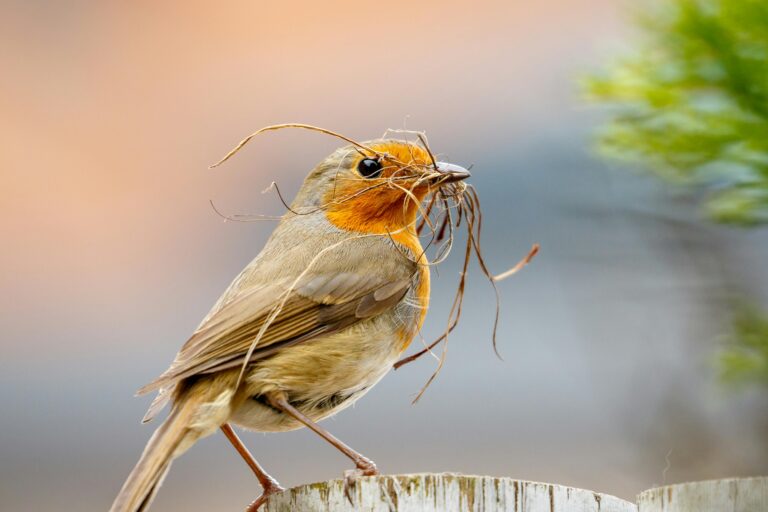
Robin (confident, often watching you): orange-red face and breast, brown back, and a habit of standing upright and making eye contact. Robins are frequent in UK gardens and are as likely to be on the ground near you (especially if you’re digging) as they are to take food from a table or low feeder.
Chaffinch (often on the ground beneath feeders): chunkier than a sparrow with a smart look. Males show a pinkish breast and slate-blue head; females are more muted brown. They often feed on fallen seed, making a regular “tick” call as they move.
Greenfinch (variable, but often at seed feeders): greenfinches look sturdy with green and yellow flashes in the wings. They can be wary but once settled they visit feeders frequently, especially for sunflower hearts. Note: if you see finches looking unwell, it’s sensible to tighten hygiene and consider pausing feeding locally (more on that below).
Familiar tits and acrobats at feeders
If you put up a feeder in the UK, the first acrobats to investigate are often tits. They’re quick, agile, and tend to grab food then fly off to eat it in cover.
Blue Tit: small, bright and high-contrast. Look for a blue cap, white cheeks and yellow underside. Blue tits are classic feeder birds, often hanging upside down on fat balls and rapidly taking sunflower hearts one by one.
Great Tit: larger than a blue tit with a bold black head and white cheeks, plus a black stripe down a yellow breast. Great tits can appear more deliberate and slightly bossier at feeders, often holding their ground.
Coal Tit: smaller and neater with a black cap and distinctive white patch on the back of the head (nape). In many UK gardens it’s a quick “drop in, take one seed, leave” visitor, often favouring peanuts or sunflower hearts.
Long-tailed Tit: instantly recognisable once you’ve seen one—small body, very long tail, soft pinkish sides and a black-and-white head. They often arrive in family parties, moving through the garden together. They may use feeders, but they also hunt tiny insects in shrubs and trees, so cover nearby helps.
If you’re trying to learn calls without getting technical: blue tits often sound sharp and busy; great tits can give a clear two-note phrase; long-tailed tits keep up a constant, light contact chatter as they move.
Black-and-white and bold garden regulars
Many UK gardens host at least one of the bolder, larger birds. These species are intelligent, adaptable, and often the first to exploit new food sources. The key is to compare size, head shape and how they move on the ground.
Magpie: black and white with a long tail and an unmistakable strutting walk. In good light, you may see green-purple sheen on the wings and tail. Magpies are often wary, scanning their surroundings before approaching food. They’re common in UK gardens, especially where there are lawns and trees nearby.
Jackdaw: smaller than a crow, with a pale eye and a greyish nape. Jackdaws are sociable and often appear in pairs or small groups, sometimes dropping onto lawns with a purposeful, upright stance.
Carrion Crow: all-black, heavy-billed and larger than a jackdaw. Crows walk confidently on lawns and can become regular visitors if there’s food available. If you’re unsure between crow and rook: rooks tend to associate with farmland and often show a paler “bare” patch at the base of the bill (though it’s not always obvious at a distance); crows are the more typical garden corvid.
Great Spotted Woodpecker: now a familiar UK garden visitor in many areas, particularly where there are mature trees nearby. Look for a black-and-white “zebra” pattern and an undulating flight. Males have a red patch on the back of the head; adults show red under the tail. In gardens, they often come to peanut feeders or suet, and you may hear drumming in spring.
Thrushes and blackbirds on lawns
If you have a lawn, you’ll often see birds feeding by listening and watching for movement in the grass. Thrushes and blackbirds are especially likely to be there, searching for worms, leatherjackets and other invertebrates.
Blackbird: the classic UK garden bird on lawns. Males are black with a bright yellow-orange bill and eye-ring; females are rich brown and slightly streaked on the breast. Blackbirds tend to run and pause, listening for prey, then tug worms from the ground. They also love berries and windfall fruit.
Song Thrush: smaller and neater than a mistle thrush, warm brown above with a pale underside marked by bold, arrowhead-shaped spots. Song thrushes are famous for using a favourite “anvil” stone to smash snail shells. In gardens, you may see them on lawns after rain or feeding on fallen fruit in autumn.
Mistle Thrush: larger, greyer and more upright, often looking slightly “long-legged”. It has rounder spotting than a song thrush and can appear quite assertive, especially around berrying trees in winter. In some gardens it’s an occasional visitor rather than a daily one.
Starling: in winter, starlings can look dark with pale speckles; in spring and summer they appear glossier with an iridescent sheen and a yellow bill. They’re energetic, noisy and often feed in flocks. On lawns they probe rapidly, and they can empty feeders quickly. While they can be challenging at feeding stations, they’re also a classic UK garden bird and can be encouraged to feed in a designated area with suitable food.
What to feed garden birds in the UK (and what to avoid)
Food is the easiest way to attract garden birds in the UK, but it works best when it’s appropriate, fresh and offered in the right way. Different species prefer different foods and feeding styles, so a mix of feeder types usually brings the best variety.
Best foods by feeder type
Seed feeders (tubes): sunflower hearts are one of the most widely useful options, taken by tits, finches and sparrows with less mess than mixed seed. If you use a seed mix, check what’s left under the feeder: if birds are consistently discarding certain grains (often wheat or larger, cheaper fillers), switch to a better-quality mix or use sunflower hearts.
Peanut feeders (mesh): peanuts are high-energy and loved by great spotted woodpeckers, tits and nuthatches (where present). Use a proper mesh peanut feeder so birds can’t carry off large pieces. Buy from reputable sources intended for wild birds to reduce the risk of mould contamination.
Suet and fat products: fat balls, suet pellets and suet blocks are excellent in colder months and very popular year-round. Offer them in a feeder designed for suet (rather than in netting, which can be problematic). Suet attracts tits, starlings and sometimes woodpeckers, and it can help keep birds visiting when natural food is scarce.
Nyjer seed: if you’re aiming to attract finches (such as goldfinches), a nyjer feeder can help. Nyjer works best in a specialist small-port feeder to reduce waste.
Mealworms (live or dried): mealworms are excellent for insect-eaters and are especially useful in spring and summer. Robins, blackbirds and starlings may take them readily once they recognise them as food. If using dried mealworms, soaking can make them easier for birds to take, especially in dry weather.
Foods to avoid or use cautiously
Bread: birds will eat it, but it’s not ideal as a main food because it can be filling without offering much nutrition compared to seeds, suet or mealworms. If you do put out bread occasionally, keep quantities small, remove soggy leftovers, and consider better swaps like sunflower hearts or suet.
Milk: avoid putting out milk for birds; it can cause digestive upset and it spoils quickly outdoors.
Salty or highly processed foods: salted peanuts, salted crisps, and heavily seasoned scraps are best avoided. Stick to foods sold for wild birds or plain kitchen-safe items used sparingly (for example, small amounts of plain cooked rice can be taken, but it shouldn’t replace a proper bird food).
Desiccated coconut: many sources advise caution because it can swell if eaten dry. If you want to offer coconut, choose products intended for wild birds and avoid large dry quantities.
Loose peanuts during nesting: whole peanuts can pose a risk if adults carry large pieces to chicks. Using a mesh feeder helps reduce that risk by making birds take small amounts.
Hygiene matters: more problems in UK gardens come from dirty, wet food than from choosing the “wrong” seed. Keep food dry, remove clumps, and clean feeders regularly to reduce the chance of disease spreading at busy feeding stations.
When and how to feed: a UK season-by-season approach
Garden bird feeding in the UK works best when it follows the seasons. Birds’ needs change through the year, and so does the natural food available. The aim is consistency without overdoing it, and a setup that stays clean and safe.
Spring
Spring is high-energy: birds are pairing up, defending territories and nesting. Keep a steady supply of sunflower hearts and suet, and consider mealworms for insect-eaters. Make sure water is available for drinking and bathing. Offer peanuts in a mesh feeder rather than loose, and keep feeding areas tidy.
Summer
Natural food peaks in summer, so you may see birds rely less on feeders—this is normal. Continue light feeding to support adults and newly fledged young, and keep water especially fresh in hot spells. Avoid disturbing nesting areas in hedges and climbers, and watch for signs that food is going damp or mouldy after rain.
Autumn
Autumn is about building reserves. Increase seed and suet gradually, and leave some natural food available where possible (seedheads, berries). This is a great time to add shrubs that provide winter berries or dense cover, which can make your garden more attractive as birds move around locally.
Winter
Winter is when UK garden birds can become most dependent on reliable feeding, particularly during cold snaps. Aim for consistency: put food out early, keep it topped up, and ensure water doesn’t freeze (a fresh refill can be enough; avoid adding anything to the water). High-energy foods like suet and peanuts (in a feeder) are especially valuable, alongside sunflower hearts.
Create a bird-friendly UK garden (habitat that brings more species)
Feeding helps, but habitat is what turns a “visited” garden into a garden birds use daily. In the UK, the most useful habitat features are simple: cover, insects, natural food (berries and seeds), and quiet corners.
Planting choices that help (native-leaning)
You don’t need a huge garden—just the right structure. A few well-chosen plants can create a sheltered feeding area and bring in insects that support breeding birds.
- Hedges and thorny shelter: hawthorn and blackthorn are classic choices where space allows, offering dense cover and (in season) flowers and berries that support a wide range of wildlife.
- Berries for autumn and winter: rowan, holly and some garden-friendly berrying shrubs can provide valuable food in colder months, often attracting thrushes and blackbirds.
- Seedheads for finches: teasel and similar plants can hold seed into winter if left standing, and they add structure even in smaller beds.
- Climbers for cover: ivy (managed sensibly) can be excellent for shelter and late nectar; it also provides nesting opportunities. Other climbers can help if you’re short on space.
Aim for a mix: one dense evergreen-ish area for cover, and one area that’s allowed to flower and seed. Even “native-leaning” planting in a typical UK garden generally supports more insects than a fully hard-landscaped space.
Simple “messy corners” that boost birds
Many UK garden birds feed where it looks untidy to us. A few small changes can increase invertebrates and create safe foraging spots:
- Leave some leaf litter under shrubs for blackbirds and robins to rummage through.
- Keep a small log pile in a shady corner; it can harbour insects and provide cover.
- Let seedheads stand through autumn and winter instead of deadheading everything.
- Mow less often (or leave a strip longer). Even slightly longer grass can hold more insect life and provide feeding opportunities.
Nesting and breeding support for garden birds (UK)
Supporting breeding birds in UK gardens is less about “intervening” and more about providing safe, suitable places to nest and raising fewer risks around the garden. Nest boxes can help, but so can protecting the natural nesting sites you already have.
Nest boxes: types, placement and timing
If you’re putting up nest boxes, match the box type to the birds you want to support:
- Small hole boxes (commonly around 25mm): often suitable for smaller tits.
- Larger hole boxes (commonly around 32mm): can suit great tits and some other species.
- Open-front boxes: can be used by robins and similar species that prefer a ledge-like site (they often choose sheltered spots such as behind vegetation or under eaves).
Place boxes out of reach of easy predators, ideally on a tree or wall with a clear approach but not fully exposed. A north-east aspect is often suggested to avoid strong sun and the worst rain, but practicality matters: choose a spot that stays relatively cool, sheltered and quiet.
Put boxes up well before the breeding season if you can, but don’t worry if you’re late—birds also use boxes for roosting. Clean out old nesting material after the breeding season (typically autumn) using gloves, and avoid harsh chemicals.
Natural nesting sites to protect
Hedges, climbers, dense shrubs and even tucked-away corners can be valuable nesting habitat. Try to avoid heavy cutting back during peak nesting months. In the UK there are legal protections around nesting birds, so if you’re planning major hedge work it’s wise to check current guidance and always inspect carefully before trimming. As a general rule: if birds are using an area, give it space until the season has passed.
Keep garden birds safe: predators, windows and disease basics
A bird-friendly UK garden isn’t just about attracting birds—it’s about reducing the common hazards that can turn a feeding station into a risky place. You can’t remove every danger, but small adjustments can make a meaningful difference.
Cats and foxes: realistic mitigation
Cats are a significant predator of garden birds, and the best approach is practical risk reduction rather than assuming you can eliminate the problem. Try these steps:
- Place feeders near cover (so birds can escape) but not right next to a hiding place where a cat can ambush. A couple of metres from dense shrubs is often a workable balance.
- Avoid ground feeding in exposed areas if cats frequent your garden. If you do feed on the ground, keep it close to cover and clear up promptly.
- Time and vigilance: dawn and dusk can be higher-risk periods. If you know a cat patrols then, keep an eye on activity and consider shifting feeding to a safer window.
- Collars and deterrents: there’s mixed evidence and strong opinions about what works best (bells, bright collars, deterrents), and not all are suitable for every cat. If in doubt, focus on feeder placement, cover and reducing surprise ambush spots.
Foxes are common in many UK areas too. They’re less likely to catch healthy adult birds, but they will eat spilled food. Keep the ground beneath feeders clean and consider using trays or moving feeders regularly.
Window strikes
Window collisions are one of the most preventable garden bird hazards. Birds often hit glass because they see reflections of sky and vegetation, or they try to fly “through” the house to greenery on the other side.
- Add visible markers on the outside of problem panes (decals, films, or closely spaced markings) so birds recognise it as a barrier.
- Move feeders: a common rule of thumb is either place them very close to the window (so birds can’t build up speed) or further away so they’re less likely to fly into glass after leaving the feeder. Your garden layout will determine which is safer.
- Reduce reflections where possible by adjusting indoor lighting at night and using external shading if practical.
Feeder hygiene and sick birds
Busy feeding stations bring birds into close contact, so hygiene is a core part of feeding responsibly in the UK:
- Clean feeders regularly: frequency depends on weather and how busy they are, but aim for at least weekly, and more often in warm, wet conditions.
- Rotate or rest feeding spots if one area becomes heavily soiled.
- Remove wet or mouldy food immediately and keep seed dry.
If you notice birds that look unwell (fluffed up for long periods, lethargic, eyes closed, or showing visible growths), avoid trying to diagnose. A cautious approach is to pause feeding locally for a short period, clean everything thoroughly, and check current UK guidance from relevant animal health and wildlife organisations. If you find an injured bird, consider contacting a local wildlife rescue for advice.
Troubleshooting: why you’re not getting many garden birds
If your garden feels “quiet”, it’s usually fixable. Most UK gardens can attract a good mix of species, but birds are choosy about safety and consistency.
- Food mismatch: if you’re only putting out mixed seed and it’s being left behind, switch to sunflower hearts or add suet. If you want robins and blackbirds, try mealworms or a low table.
- Feeder position: too exposed and birds won’t feel safe; too deep in shrubs and predators can ambush. Aim for a clear view with nearby escape cover.
- No water: in many UK gardens, adding a simple water source brings birds faster than adding a second feeder.
- Dirty setup