
Sparrow Nesting Boxes
Sparrow nesting boxes made simple: choose the right 32mm entrance, place them well, and use practical tips to help sparrows move in.
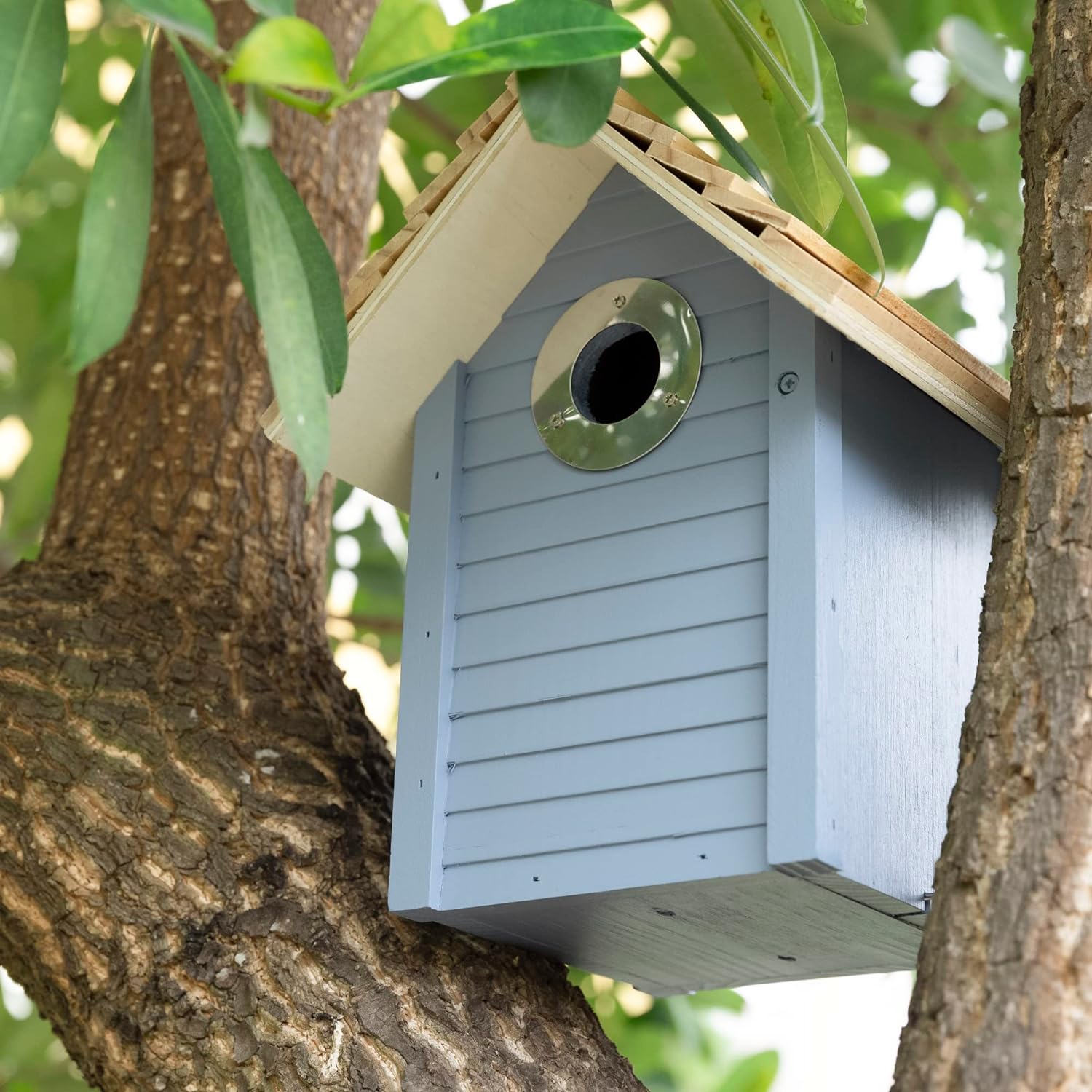
If sparrows are visiting your garden but won’t use a box, it’s usually down to a few fixable details: the entrance size, the position, and how exposed the box feels. This guide to sparrow nesting boxes is designed to get you from “which one should I buy?” to “how do I actually get sparrows to move in?” within minutes. We’ll cover what a good box looks like for House Sparrows and Tree Sparrows, the best box styles (including terraces for colonies), exactly where to place them in a typical UK garden or on a terrace house, when to put them up, and how to maintain them safely once the breeding season is over.
What makes a good sparrow nesting box? (UK checklist)
Sparrows are tough little birds, but they’re surprisingly picky about nest sites. The best sparrow nesting boxes feel secure, dry and sheltered, with enough internal space for a busy brood and room for the parents to turn and feed chicks. Before you buy, use this quick UK checklist:
- Correct entrance size for sparrows (and to discourage larger competitors).
- A decent internal floor area and enough depth so chicks can’t easily tumble out.
- Thick, untreated timber (or a well-designed alternative) to buffer temperature swings.
- Ventilation and drainage that keeps the box dry without creating draughts.
- Secure fixings and a lid/roof that can be opened for end-of-season cleaning.
Entrance hole size and why 32mm matters (House Sparrow/Tree Sparrow)
In most UK gardens, a 32mm entrance hole is the sweet spot for sparrow nesting boxes. It’s widely used for both House Sparrows and Tree Sparrows, and it also helps reduce the chance of larger birds taking over. If you go bigger “just in case”, you often make the box more attractive to competitors, and you make it easier for predators to reach in. If you go smaller, sparrows may struggle to enter comfortably or avoid the box altogether.
Look for a cleanly cut hole with no rough splinters, ideally slightly recessed or with a thicker front panel. Avoid boxes with a perch under the hole: sparrows don’t need one, and it can make it easier for other birds (or predators) to access the entrance.
Internal floor size and depth (room for broods)
Sparrows can raise good-sized broods, and they like a box that doesn’t feel cramped. As a rough buying rule, aim for a box with a generous floor area (around 12 x 12cm or larger) and good depth so the nest cup sits well below the entrance. Depth helps in two ways: it makes chicks less likely to fall out, and it makes the interior feel safer and darker.
For terrace/colony boxes, each compartment should still feel like a proper “single box” inside, not a token space.
Materials, thickness, ventilation/drainage, and safe fixings
The most reliable sparrow nesting boxes for UK weather are made from thick, untreated wood (often 15–20mm). Thicker walls help reduce overheating in a warm spell and keep the box less cold on chilly spring nights. Check that the roof overhangs a little to shed rain, and that there are small drainage holes in the base.
Ventilation is useful, but it shouldn’t mean gaps you can see daylight through. A couple of small vents high up (under the roofline) is usually enough. Avoid strong-smelling treatments or paints inside the box. If a listing mentions wood preservative, it should only be on the outside and fully dry long before the breeding season.
For mounting, sturdy screws and appropriate wall plugs are better than string or thin wire. If you’re fixing to a tree, use a tree-friendly strap system rather than screwing directly into the trunk. Whatever you choose, make sure the box can’t wobble in wind—movement is a common reason sparrows inspect a box and then abandon it.
Best sparrow nesting box styles (and when to choose each)
There isn’t one “best” nest box for every garden, because sparrows vary in how social they are and how many are already around you. The most successful approach is to match the style to the situation: a single box for occasional pairs, or a terrace/colony box if you’re regularly seeing small groups feeding together.
Single-hole wooden box (best all-round)
A classic wooden box with a 32mm entrance is the best all-round option if you want one reliable box that’s easy to site and maintain. Choose a model with thick timber, a sloping roof, and an opening lid (either a hinged roof or a front panel) for cleaning. A simple design often outperforms “fancy” boxes with lots of add-ons.
Single boxes are also easier to place discreetly near cover, which can matter in gardens where sparrows are nervous of cats or frequent human movement.
Sparrow terrace / colony boxes (when you have multiple birds)
House Sparrows in particular can be colonial breeders, and they often do well with a sparrow terrace (a multi-compartment box). If you regularly see several sparrows feeding together, bickering in hedges, or repeatedly investigating the same area under eaves, a terrace can be the most natural fit.
What to look for in a terrace box:
- Separate compartments with their own entrances, rather than a single shared space.
- Consistent entrance size (again, 32mm is the common UK choice).
- A proper divider thickness so each chamber feels secure and reduces disturbance between neighbours.
- Cleaning access to each compartment (either separate lids or a full-length roof that opens).
Don’t be surprised if only one compartment is used in year one. Once sparrows associate a terrace with successful breeding, occupancy often increases in later seasons. Terraces work particularly well on house walls, garages and garden buildings where you can mount them high and stable.
Swift-style “under eaves” look vs wall-mounted (pros/cons for sparrows)
Some boxes are designed to look discreet under eaves or to mimic older house features. That can work well for sparrows because many used to nest in gaps under roof tiles and soffits. The key is not the “look”, but the practicality: the box must remain dry, be securely fixed, and have a suitable entrance and internal depth.
Wall-mounted boxes are often simpler to install and inspect (from a safe distance). Under-eaves styles can be excellent on modern houses where there’s limited cover, but make sure you’re not placing the entrance right above a busy doorway or a frequently used patio area.
Natural log / birch-style boxes (what they’re good for, what to check)
Natural log-style boxes can blend in nicely and offer good insulation, but do check the basics: is the internal space large enough, is there a way to open it for cleaning, and is the entrance a true 32mm rather than an approximate hole that’s slightly too tight?
Also check weight and fixings. A heavy log box needs robust mounting so it won’t shift during wind or when a predator investigates. If a log box is awkward to open, it can be tempting to skip cleaning—so choose one you can realistically maintain each year.
Where to put sparrow nesting boxes in a UK garden (positioning that works)
The best sparrow nesting boxes can still be ignored if they’re in the wrong place. Sparrows want to feed their chicks efficiently, stay out of reach of predators, and avoid driving rain and strong wind. Think of placement as “secure access”: an easy flight line in, nearby cover, and a stable, sheltered position.
Height, aspect and shelter from weather (UK prevailing rain/wind)
A typical mounting height for sparrow nesting boxes is 2–4 metres. Higher can be fine if you can install it safely, but don’t sacrifice stability. The box should feel solid and not swing.
Aspect matters because UK weather can be harsh in spring. A good default is to avoid the most exposed, wind-driven rain. In many parts of the UK the wettest weather often comes in from the south-west, so a box facing directly into that can end up damp and chilly. Aim for a spot that gets some morning light but isn’t blasted by full afternoon sun in midsummer. If your garden is very open, prioritise shelter from wind over “perfect” compass direction.
Near cover but not hidden: hedges, climbers, and flight lines
Sparrows like to be close to cover such as hedges, shrubs, ivy, or climbers because it gives them a quick escape route. A box mounted on a wall near a hedge line, or on a fence post near dense planting, often works well. However, don’t bury the entrance behind foliage. The birds need a clean approach and a clear view as they land.
Try to imagine the flight path: can a sparrow fly straight in and out without weaving through branches? Also consider where your garden activity is concentrated. If the box is directly over the spot where you hang washing, open recycling bins, or spend a lot of time chatting, you may see lots of “interest” but little commitment.
Spacing: how close can boxes be for sparrows? (single vs terrace)
Spacing depends on whether you’re putting up single boxes or a terrace. If you have a terrace box, the compartments are designed to be close together, and sparrows generally tolerate that well (it’s the point of the design).
For single boxes, there’s no one perfect distance, because local sparrow density varies hugely. As a practical UK rule, if you have a busy group of sparrows already, you can place two single boxes on the same building or fence line, separated by a few metres, especially if there’s plenty of cover. If you only see the occasional pair, start with one well-sited box first. If it’s used, add another the following season.
If you notice persistent fighting at the entrance, or one pair repeatedly blocking another, that’s a sign to add options (a second box) or adjust placement slightly to provide different approach routes.
Urban terraces, flats and small gardens (practical mounting ideas)
Small spaces can still work brilliantly for sparrow nesting boxes, particularly if you already have sparrows visiting feeders. In terraced streets, sparrows often travel along rows of gardens and rooftops. Good options include:
- High on a rear wall (house, outhouse, garage) away from the busiest door.
- On a balcony wall if you can mount securely and keep disturbance low.
- On a sturdy shed with an uncluttered approach route.
If you live in a flat and can’t drill walls, a well-braced mounting board fixed to a solid structure can work, but it must be safe and stable in wind. Avoid placing boxes above neighbours’ windows or where droppings could cause issues; a little thought now prevents problems later.
When to put up sparrow nesting boxes (and what happens if you’re late)
In the UK, it’s best to put up sparrow nesting boxes well before the breeding season so birds can inspect them and get used to them as part of the territory. Late winter is ideal, but any time outside the peak nesting period can still be worthwhile.
If you’re late, don’t panic. Sparrows can raise more than one brood, and they may still take to a new box later in spring or early summer—especially if you already have sparrows around. For a month-by-month guide to typical timing, see the UK Bird Nesting Calendar.
How to attract sparrows to a new nest box (without disturbing them)
The most effective “attraction” is simply making your garden feel like a safe, reliable place to live: steady food, fresh water, nearby cover, and minimal disturbance near the box. Avoid the temptation to keep checking the inside—sparrows may abandon a site if it feels monitored.
Food and water placement (what helps, what to avoid right under the entrance)
Feeding sparrows can help them settle locally, which increases the chance they’ll use sparrow nesting boxes. A mix of appropriate seed and a dependable water source (for drinking and bathing) can make a real difference, especially in urban areas.
Place feeders near cover so sparrows can dash back to safety, but avoid putting a feeder directly under the nest box entrance. Constant traffic right at the doorway can cause congestion, increase mess around the box, and make it easier for predators to learn the location. A short distance away—still within the same “safe zone”—usually works better.
Nesting material: what to offer and what not to (avoid string/hair; safe alternatives)
Sparrows will collect their own nesting material, but you can help by leaving a small patch of the garden a bit “messy”: dry grass, soft plant stems, and fallen leaves can all be useful. If you want to provide material, offer short, natural options such as small amounts of dry grass or moss left in a quiet corner.
Avoid leaving out string, yarn, or long hair. These can tangle around legs and cause serious injury. If you’re a pet owner, it’s also best not to put out loose pet fur; it can mat when wet and isn’t always safe. When in doubt, let sparrows choose natural materials from the garden.
Patience + signs of interest + when to stop checking
Sparrows often “test” a box before committing. Signs of interest include repeated visits to the entrance, birds calling from nearby perches, and brief entries and exits. You may also see them carrying nesting material and then disappearing into cover; they sometimes start in one place and switch later.
Once you see serious interest, the best thing you can do is stop approaching the box. Watching from indoors or from a distance is ideal. If you want to monitor activity, consider a hands-off approach such as a wildlife camera set up well away from the entrance; our guide to Bird Trail Cameras explains options that minimise disturbance.
Common reasons sparrows ignore nesting boxes (quick fixes)
If your sparrow nesting boxes have been up for a season with no takers, run through these quick fixes. In many cases, one small adjustment is enough to turn things around.
- Entrance hole is wrong: if it’s larger than 32mm, you may be inviting competitors. If it’s smaller or uneven, sparrows may avoid it. Choose a box with a clean 32mm hole.
- Too exposed to rain/wind: move it to a more sheltered wall or rotate it so it isn’t facing the worst weather.
- Too hot in sun: if it gets strong afternoon sun, shift it to a shadier spot or choose a thicker-walled box to buffer heat.
- No nearby cover: add a hedge, climber, or shrub nearby (not blocking the entrance) so sparrows have a safe staging area.
- Predator pressure: if cats can sit beneath the box or jump onto a nearby ledge, adjust the position and consider a guard/baffle (see below).
- Human disturbance: boxes above doors, patios, or busy paths are often inspected but not used. Move higher or to a quieter wall.
- Competitor species: if other birds occupy the box first, you may need a different entrance size or an additional box elsewhere to give sparrows options.
- Old nest/mites: a box left dirty can put birds off. Clean at the right time (see maintenance section).
It’s also worth remembering that sparrow numbers are very local. If you rarely see sparrows in your area, focus first on making the garden sparrow-friendly with food, water and cover, and read more about their urban needs in The Importance of House Sparrows in Urban Ecosystems.
Predators, competition and legal/welfare notes (UK)
Predation and disturbance are a reality in UK gardens, and sparrows know it. The goal isn’t to “predator proof” everything (rarely possible), but to reduce easy opportunities and keep the birds safe without causing harm to wildlife.
Cat/rat/squirrel deterrence and baffles (practical)
Cats are often the main concern. Place sparrow nesting boxes where a cat can’t sit on a nearby shed roof, fence top or branch and leap at the entrance. A smoother wall with fewer “stepping stones” is often safer than a cluttered corner.
If your box is on a pole or post (less common for sparrows, but possible in some gardens), a baffle can help deter climbing predators. For wall-mounted boxes, a well-fitted predator guard around the entrance may reduce reach-in attempts, provided it doesn’t obstruct the hole or create sharp edges.
Rats are usually drawn by spilled food rather than the box itself. Keep the area under feeders tidy, use a feeder tray if it reduces scatter, and avoid leaving large amounts of food on the ground overnight.
Magpies/crows: realistic risk and what you can do ethically
Corvids such as magpies can take eggs or chicks, but in many gardens they’re opportunists rather than constant nest raiders. A good box design (deep interior, correct entrance size, no perch) and sensible placement (sheltered, not exposed on an open fence line) reduces risk.
If you want a better understanding of what magpies do and don’t typically


