Bird Identification Guide

What Bird Did I See? A Practical UK Bird Identification Guide
You’ve just seen a bird in the UK and it’s gone before you could identify it. The quickest way to get an answer is to treat it like a short diagnostic: write down a few key details, then narrow the options in a set order. Start by noting size (compared with robin/blackbird/pigeon/crow), shape (silhouette), where the main colours were, bill/legs/tail, behaviour, and habitat. If you heard it, add a rough description of the call. Then work through the steps below from Step 1 to Step 7. By the end, you should have a short list of likely UK species (and the lookalikes to check).
60‑second checklist: write these down before you forget
Before you open an app or a book, capture what your eyes and ears actually had. Even rough notes are better than a perfect memory.
- Size: smaller than a robin, robin-sized, blackbird-sized, pigeon-sized, crow-sized (or bigger).
- Silhouette: short tail or long tail? chunky or slim? long neck/legs? long pointed wings?
- Main colours: not “brown”, but where the brown was (back? breast? wings?) and any contrast (white flashes, dark cap, bright rump).
- Standout features: eyebrow stripe, wing bars, speckled breast, coloured bill, leg colour, crest, forked tail.
- Behaviour: hopping on lawn, running, probing mud, climbing a trunk, hanging on a feeder, hovering, soaring, diving.
- Habitat (be specific): garden feeder, hedge line, park lawn, reedbed edge, woodland ride, rocky shore, estuary mudflat, freshwater lake margin, urban roofline.
- Sound: did it sing or give a short call? one note repeated? a rattle? a squeak? a loud “kek-kek-kek”?
- Alone or in a flock: single bird, pair, small group, large flock, mixed flock (tits/finches), big roost of gulls/starlings.
- When and where: date, time, county/nearest town, inland/coastal, and if possible what direction it flew.
- Viewing conditions: distance, backlit or sun behind you, binoculars yes/no. (Backlighting can turn many birds into “black”.)
Quick tip: do a 10‑second sketch of the outline (body, head, tail) and then add just two or three blocks for markings (for example: “white wing patch”, “dark cap”, “pale rump”). No art skill needed—this is about remembering placement.
Step 1 — Size and shape (silhouette)
Pick a size bracket (using UK “reference birds”)
Size is your fastest filter. Use birds you already know as a ruler:
- Smaller than robin: goldcrest, long-tailed tit, wren (though wren looks “round” rather than tiny).
- Robin-sized: robin, blue tit, great tit, dunnock, pied wagtail (slimmer), chaffinch (chunkier head).
- Blackbird-sized: blackbird, song thrush, mistle thrush (often looks bulkier), starling (shorter tail).
- Pigeon-sized: woodpigeon, feral pigeon, jay (shorter tail; broad wings), magpie (long tail).
- Crow-sized and up: carrion crow, rook, jackdaw (shorter neck), gulls, buzzard, heron.
If you only saw it briefly, pick the nearest bracket and hold it loosely. People often overestimate size at distance, especially in open landscapes or when a bird is flying.
Body plan cues: what did it “look like” in one glance?
Silhouette tends to be more reliable than colour, particularly in poor light.
- Thrush-like: upright stance, medium tail, often on lawns; check for speckled breast. Likely: song thrush, mistle thrush, blackbird (less speckling; males black).
- Finch-like: chunky body, big-looking head, short neck; often in small flocks at feeders. Likely: chaffinch, greenfinch, goldfinch, bullfinch (stocky).
- Wagtail/pipit-like: slim, long tail, ground-feeding with tail movement. Likely: pied wagtail, grey wagtail (yellow underparts), meadow pipit.
- Gull-like: long wings, floating flight, often by water or urban sites; check head pattern and wing tips. Likely: black-headed, herring, lesser black-backed (among many).
- Wader-like: longer legs, often probing or picking; on mud, shorelines, wet fields. Likely: redshank, curlew, oystercatcher, lapwing.
- Raptor-like: broad wings and fanned tail, soaring or gliding; or fast and pointed-winged like a falcon. Likely: common buzzard, red kite, kestrel, sparrowhawk.
- Pigeon-like: small head, plump body, strong direct flight; often in towns/farmland. Likely: woodpigeon, collared dove, feral pigeon.
- Heron-like: long legs and long neck (often kinked back in flight). Likely: grey heron; in white, little egret.
Prompt to answer: if you had to describe it as “a small finch”, “a slim wagtail”, or “a big soaring raptor”, which would you choose?
Step 2 — Where were the key colours and markings?
Place the colour: the map matters more than the shade
Instead of trying to recall every colour, place just the strongest contrasts on a “bird map”:
- Head: cap (dark/black?), pale crown stripe, bold eyebrow (supercilium), dark eye line.
- Throat and breast: bib, breast band, plain breast versus spotted/streaked.
- Wings: wing bars, a single bright panel, white wing patch, dark wing tips.
- Back and rump: plain back, streaked back, or a contrasting rump visible as it flew away.
- Tail: tail corners (white outer feathers), forked tail, very long tail.
Two well-placed markings can narrow things dramatically—especially if you remember where the white/yellow/red was rather than how “bright” it seemed.
Patterns that narrow fast (UK examples)
- Wing bars: a clear double wing bar often points you towards birds like chaffinch (bold white bars) or house sparrow (male has a pale wing bar), while many warblers are plain-winged. (Light can exaggerate faint bars, so treat weak wing bars cautiously.)
- White rump: a bright white rump flashing as the bird flew can be a strong clue for wheatear (often with a black “T” pattern on tail), especially on open ground/coast.
- Bold black cap: can suggest tit species, but be careful—caps vary with angle and light. Coal tit often shows a white nape patch; marsh/willow tit are tricky and usually need multiple features (voice, wing panel, habitat) rather than “cap only”.
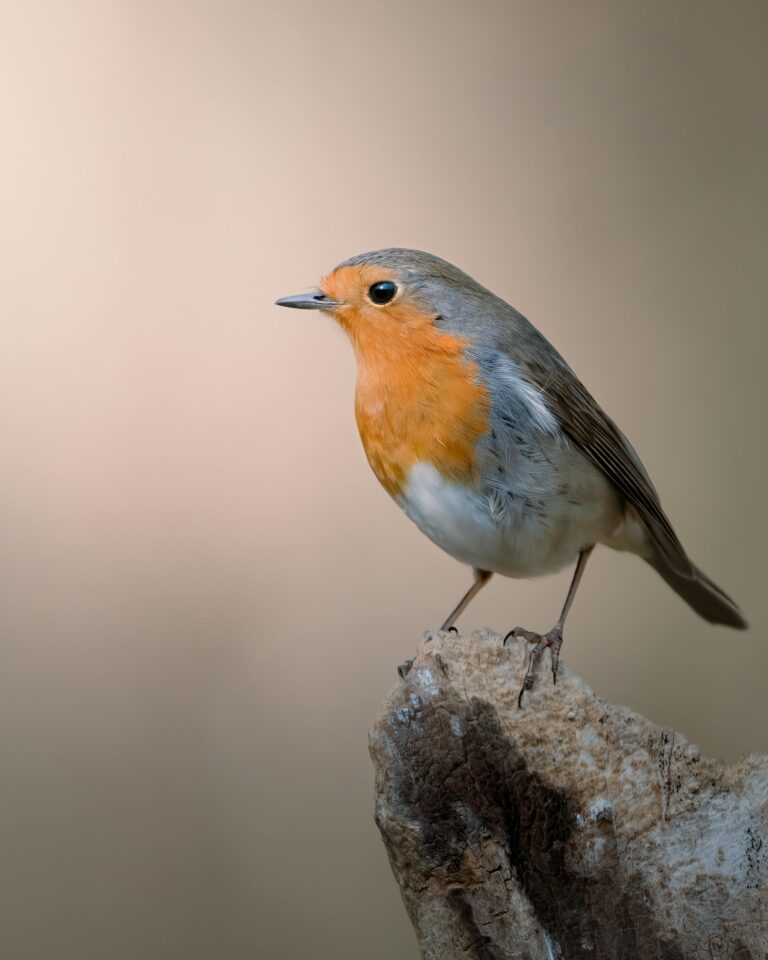
- Red/orange breast: robin shows orange-red extending onto the face; redstart (a summer visitor) has an orange tail it often flicks, and males have a black face and white forehead.
- Speckled breast: song thrush tends to have neat, dark “arrowhead” spots; mistle thrush is larger with rounder spots and often looks paler overall.
Prompt to answer: what was the single most obvious marking—wing bars, eyebrow, rump flash, breast colour, or speckling?
Step 3 — Bill, legs and tail: the small details that solve the puzzle
Once you have a shortlist from size/shape and markings, zoom in mentally on bill, legs and tail. These often confirm (or rule out) an assumption.
- Conical “seed” bill (finch-type): thick, triangular. Suggests chaffinch, greenfinch, goldfinch, bullfinch. Even at distance, these birds can look “big-billed”.
- Thin insect bill (warbler-type): fine, pointed. Suggests chiffchaff, willow warbler, whitethroat (mostly spring/summer, and often seen in scrub/hedges).
- Hooked bill (raptors): confirms birds of prey; then use tail shape, wing shape and flight style to narrow further.
- Dagger bill: long and straight, typical of grey heron and little egret.
- Flat bill (duck): if you saw a broad, flat bill on water, you’re in duck/grebe territory; behaviour (diving vs dabbling) helps next.
- Chisel bill (woodpecker): plus a stiff tail used as a prop on trunks.
Legs: long legs push you towards waders/herons; short legs suit perching birds. Leg colour can help but is rarely decisive on its own (mud, shade and distance mislead).
Tail: watch both shape and action:
- Long tail with constant wagging: pied wagtail (black/white/grey) or grey wagtail (yellow underparts, often near running water).
- Cocked tail: classic wren posture (small, round, often in cover).
- Tail pumping/flicking: stonechat and redstart often flick the tail; use habitat and colour to separate them.
- Forked tail: swallow (deep fork, long streamers), house martin (shorter fork, white rump), swift (not forked—sickle wings, fast flight).
- White outer tail feathers: can flash on birds like pied wagtail in flight; check alongside size and habitat.
Step 4 — Behaviour clues: what it was doing matters
Behaviour is often the tie-breaker when several species share similar colours.
Feeding style prompts:
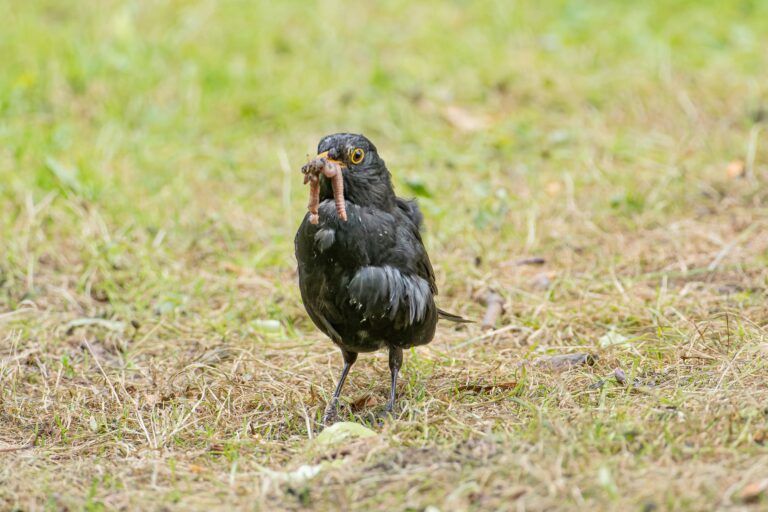
- Ground hopping on lawns: blackbird, thrushes, robin, starling. Starlings often stride purposefully and probe; blackbirds hop and pause with a more upright look.
- Running rather than hopping: many waders (and wagtails) run in short bursts, stopping to pick.
- Probing mud with a longer bill: likely wader—think redshank, curlew, oystercatcher (bold black/white, orange bill).
- Hovering then dropping: kestrel is the classic hovering raptor; also some gulls hover briefly, but kestrel has pointed wings and a long tail.
- Sallying from a perch (fly out, grab insect, return): flycatcher-type behaviour; in the UK you might see spotted flycatcher (scarcer now) in summer, or simply notice “flycatching” by robin/black redstart in towns.
- Hanging acrobatically on feeders: blue tit and great tit; goldfinch often clings to seed heads too.
- Climbing tree trunks: nuthatch (can go downwards), treecreeper (spirals up), and woodpeckers (strong, bounding flight between trees).
Flight style prompts:
- Bounding “up and down” flight: typical of many finches (chaffinch, greenfinch) and also some buntings.
- Undulating with quick wingbeats then a dip: great spotted woodpecker often flies like this between trees.
- Steady flap-glide or soaring on broad wings: common buzzard (broad, rounded wings) and red kite (more angled wings, forked tail).
- Low skimming and fast twists: swallows/martins hunting insects over water or fields.
- Explosive flush from cover: pheasant and partridge rocket off noisily; small birds exploding from a hedge could be sparrows/finches.
Social behaviour: lone birds can still be common, but big flocks steer you towards starlings, finches, gulls, corvids, or winter thrush flocks (redwing/fieldfare).
Step 5 — Habitat and micro‑habitat: be specific
“Woodland” is helpful; “shady oak woodland edge beside a stream” is far better. Many UK birds have strong micro‑habitat preferences.
- Garden feeder / patio: blue tit, great tit, goldfinch, greenfinch, house sparrow, robin. Clinchers: goldfinch’s bold face pattern; greenfinch’s stocky bill and yellow wing flashes; house sparrow’s chunkiness and flocking.
- Garden hedge / scrub edge: dunnock, wren, robin, blackcap (seasonal), chiffchaff (seasonal). Clinchers: wren’s cocked tail; dunnock’s thin bill and “mouse-like” creeping.
- Park lawn / playing field: blackbird, starling, woodpigeon, magpie, carrion crow. Clinchers: starling’s shorter tail and brisk probing; magpie’s very long tail.
- Reedbed edge / wet ditch: reed bunting, sedge warbler (mainly spring/summer), moorhen/coot along margins. Clinchers: reed bunting’s pale “moustache” (female/immature) and seed-perching; warblers are active and often heard first.
- Freshwater lake margin: mallard, mute swan, coot, moorhen, grey heron; in winter also goosanders or pochard in some areas. Clinchers: heron’s long legs and dagger bill; coot’s white bill/shield.
- Estuary / mudflat: redshank, curlew, oystercatcher, black-headed gull (plus many others depending on season and site). Clinchers: curlew’s long downcurved bill; oystercatcher’s striking black/white and orange bill.
- Rocky shore / harbour: turnstone (often on rocks and seaweed), cormorant/shag shapes, gulls. Clinchers: turnstone’s busy “flipping” behaviour; cormorant’s long neck and heavy body.
- Open moor / upland edge: meadow pipit, skylark (song clue), raven/crow, and raptors overhead. Clinchers: pipit’s slimness and streaking; skylark often seen as a singing bird rising.
- Urban roofline / buildings: feral pigeon, collared dove, gulls