Common Brown Birds in UK Gardens: Quick Identification Guide for Beginners
Seen a brown bird outside? This guide to common brown birds in UK gardens gives a fast shortlist, lookalikes and easy ID tips.
Common Brown Birds in UK Gardens: Quick Identification Guide for Beginners
Seen a small brown bird in your garden and can’t put a name to it? You’re not alone: many of the common brown birds in UK gardens are females or juveniles, and several species look similar at a glance.
Here’s a practical way to get to an ID quickly. First, check size and shape (sparrow-sized, blackbird-sized, or bigger). Next, note where it was (feeder, lawn, hedge, fence). Finally, pick one standout feature (streaking, spots, a long tail, a bold eye-stripe, or a fine/strong bill). Use those three steps and you’ll usually narrow your “brown garden bird” to a shortlist of 6–10 likely species within minutes.
A 60-second checklist to identify brown garden birds
Size bands that actually help
Sparrow-sized (small): This is the “LBJ” zone (little brown jobs) where most confusion happens. Think House Sparrow, Dunnock, Wren, and some finches. At this size, pay attention to bill shape and behaviour more than colour.
Blackbird-sized (medium): If it’s clearly larger than a sparrow, you’re often looking at a thrush, a female Blackbird, or a Starling. Spots on the chest or belly become much more useful at this size.
Pigeon-sized (large): Fewer “plain brown” options visit typical gardens, but you might see larger birds that read brown in poor light (for example, birds at dusk or in winter plumage). If it’s big, don’t force it into the small-bird shortlist—step back and reassess shape, posture and flight.
Where it fed tells you a lot
On hanging feeders: House Sparrows often arrive in groups and cling or perch quite confidently. Finches (like Chaffinch, Greenfinch and Goldfinch) can look surprisingly brownish at first glance, but usually show distinctive wing bars or flashes of colour when they shift position. Siskins and Redpolls may appear at some feeders, particularly where niger seed is offered.
On the lawn or under feeders: Thrushes (Song Thrush, Mistle Thrush) and female Blackbirds are classic lawn feeders. Starlings also spend ages probing lawns, especially in flocks. Ground feeding can also mean Dunnock, which often keeps close to cover and darts back into shrubs.
In hedges, borders and near cover: Wrens and Dunnocks are hedge-huggers. If the bird stayed low, slipped between stems, and only popped out briefly, that behaviour is often more telling than the colour.
The “big three” features: bill shape, streaking, tail length
Bill: A thick, cone-shaped bill suggests a seed eater (sparrow or finch). A fine, pointed bill suggests an insect eater (Dunnock, Wren). Thrushes have longer, sturdier bills for probing.
Streaking/spots: Streaks on a small bird can indicate a juvenile or a less common visitor; spots on a larger bird strongly point to a thrush. A plain belly with a warm brown back often suggests female Blackbird or Starling at distance.
Tail length and movement: Wrens have a famously short, cocked tail. Dunnocks have a longer tail than a Wren but aren’t as long-tailed as wagtails. Watch for tail flicking or pumping—it’s often a clue to behaviour rather than colour.
The most common small brown birds in UK gardens (LBJs)
House Sparrow
Best clues: Chunky, sparrow-sized bird with a thick seed-cracking bill. Often noisy and sociable, arriving in groups to feeders or feeding on the ground below them. The overall look is fairly “solid” and rounded, with a confident stance.
Male vs female: Males show a grey cap and chestnut-brown back with a black bib; females are plainer brown and buff, with less contrast. Beginners often mean female House Sparrows when they search for a “small brown bird”.
Common confusion: Dunnock. If you’re unsure, compare bill thickness (sparrow = thick; dunnock = fine) and behaviour (sparrow = bold and social; dunnock = quieter, often alone or in pairs).
Dunnock
Best clues: Sparrow-sized but slimmer, with a fine, pointed bill. Often shows a grey head and chest with a warm brown, streaky back. Dunnocks tend to skulk: feeding under shrubs, along borders, and slipping into cover when disturbed.
Common confusion: House Sparrow, especially a female or juvenile. A quick rule: if it looks “sparrow-ish” but has a delicate bill and a slightly shy, mouse-like way of moving along the ground, think Dunnock.
If you want a deeper, species-specific guide (without repeating it here), see our separate article: Dunnock: A Common Garden Bird in the UK.
Wren
Best clues: Tiny, round-bodied bird with a very short tail held cocked up. Warm brown overall, often with fine barring, but its shape and posture are usually enough. Wrens often appear as a fast “ball of brown” moving through plants or along a fence line.
Behaviour: Bobs and darts, frequently keeping close to cover. The song is loud and explosive for such a small bird—if you heard a powerful burst of song from a tiny brown bird, Wren is a strong bet.
Common confusion: Rarely confused for long once you notice the cocked tail and tiny size. If it seemed sparrow-sized, it probably wasn’t a Wren.
Robin (juvenile)
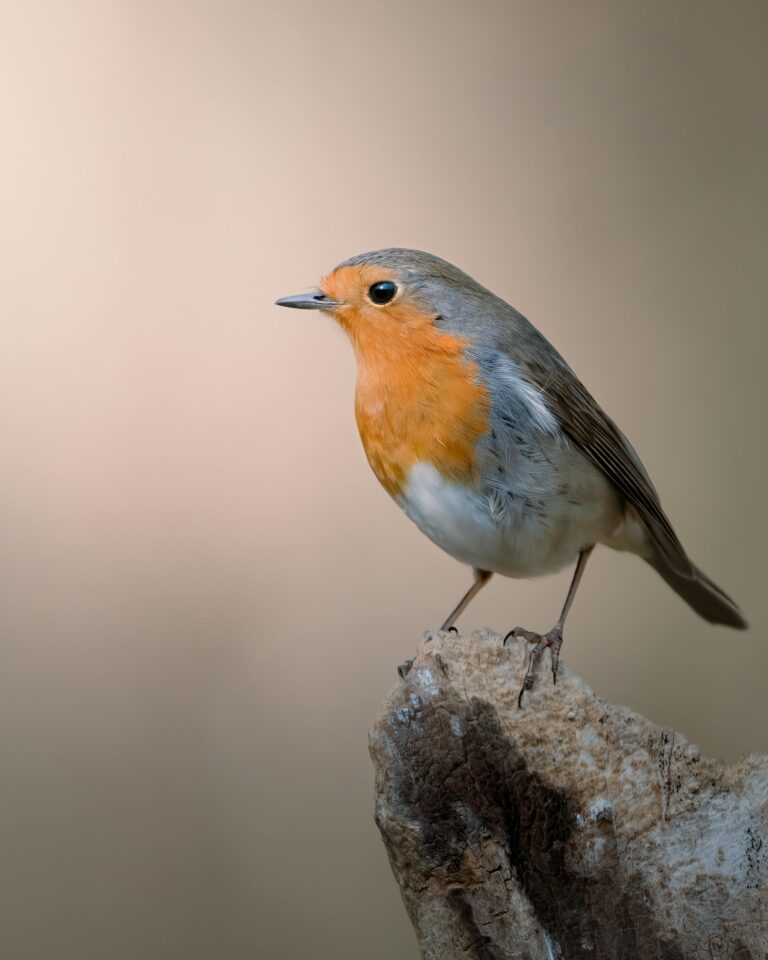
Best clues: Adult Robins don’t look brown, but juveniles do. A young Robin is brown and heavily speckled, often with a slightly “scaly” or mottled look over the chest and back. They can appear on lawns or near shrubs, sometimes looking surprisingly different from the classic red-breasted adult.
Timing: Juveniles are most often noticed in summer and early autumn, when newly fledged birds explore gardens and learn to feed.
Common confusion: Song Thrush (because both can look “spotty”). The giveaway is size: a juvenile Robin is sparrow-sized; a thrush is noticeably larger and longer-bodied.
If your “brown bird” is actually an adult Robin you’re seeing in low light, you may find our Robin Q&A useful: Robins: Common question.
Hedge Accentor vs “sparrow”: a one-sentence rule of thumb recap
If your brown bird was bold, chunky, and on the feeder with others, start with House Sparrow; if it was slimmer, fine-billed, and feeding quietly near cover, start with Dunnock. If it was tiny with a cocked tail, it’s very likely a Wren; if it was small and speckled all over in summer, consider a juvenile Robin.
Common medium-to-large brown birds you’ll see on lawns and under feeders
Song Thrush vs Mistle Thrush
Best clues (both): Thrushes are “blackbird-sized” birds with spotted underparts and a habit of feeding on lawns, pausing upright to scan and then running or hopping to probe the ground.
Song Thrush: Often the more “garden-typical” thrush for many people, though local patterns vary. It looks warm brown on the back with a creamy chest marked by neat, arrowhead-shaped spots. It can appear quite compact and is frequently seen under feeders picking up fallen seed.
Mistle Thrush: Generally larger and paler than Song Thrush, with rounder spots and a more upright, alert posture. In gardens it may feel a bit more “open-country” in character, often standing tall on a lawn or flying off strongly when approached.
Common confusion: Female Blackbird (because it’s also brown and lawn-feeding). Check for spots: thrushes have clear spotting on the chest and belly; female Blackbirds are usually much plainer underneath.
Female Blackbird
Best clues: Similar size to a male Blackbird but coloured warm brown rather than black. Look for a plain or lightly streaked breast (not strongly spotted like a thrush) and a fairly long tail. Some females show a paler eye-ring or a slightly mottled throat, especially in certain lights.
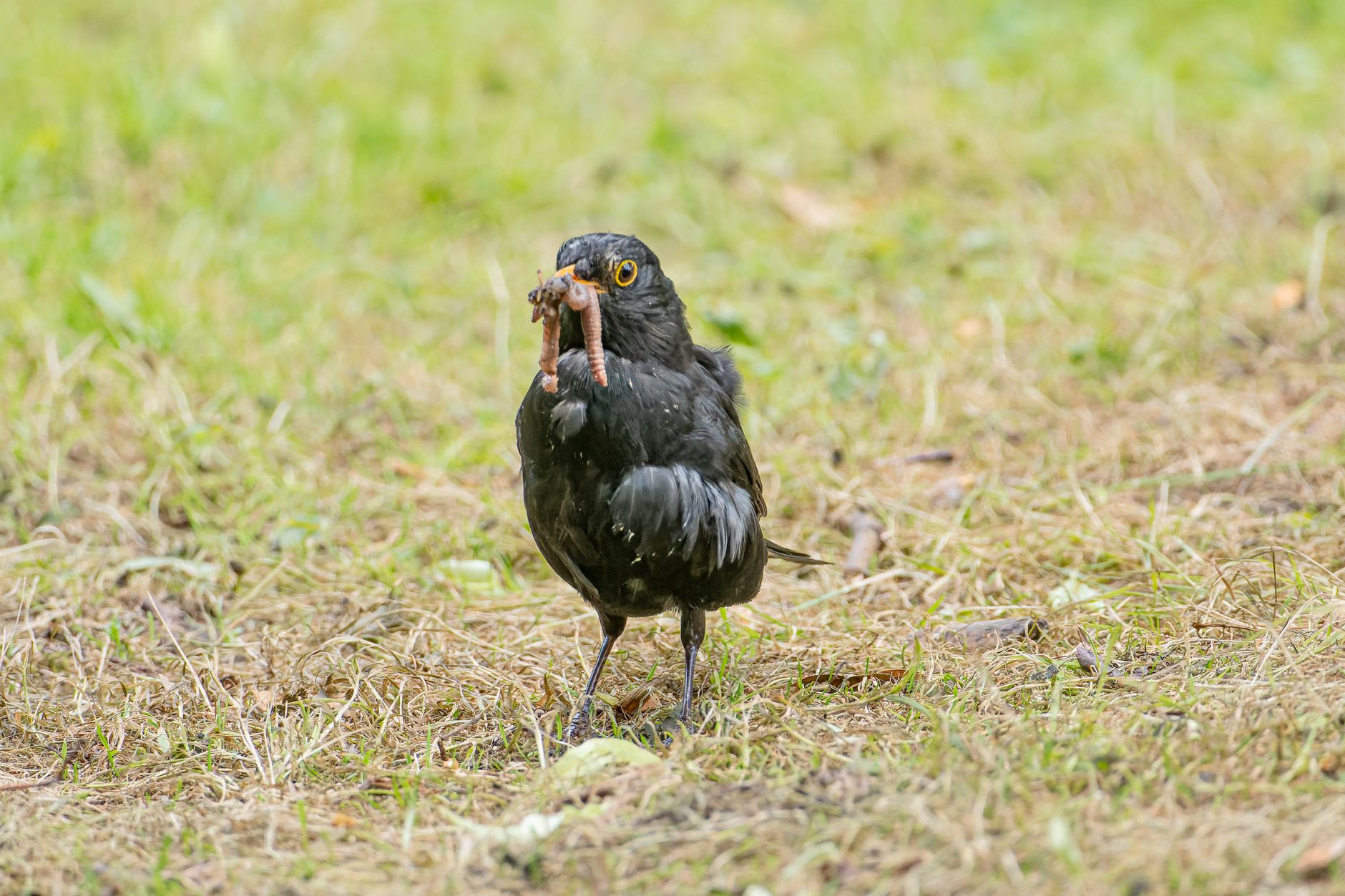
Behaviour: Often feeds on lawns, tugging at worms, or flicking leaves aside under shrubs. When alarmed, it may dash into cover rather than freezing in the open.
Common confusion: Song Thrush. If you can see clear “polka dot” spotting, lean thrush; if it looks plainer and more uniform brown, lean female Blackbird (or a juvenile Blackbird, which can also look brownish).
Starling (often “brown” at a distance)
Best clues: Starlings are technically dark and glossy, but in winter or poor light they can look brownish, especially when seen quickly on a lawn. Shape helps: a Starling has a short tail, a compact body, and a pointed bill. They often feed in busy, chattering groups, probing the ground rapidly.
Seasonal hint: Winter Starlings show pale speckling and can appear less “black” than people expect. If the bird moved with quick, purposeful steps among other similar birds, it’s worth considering Starling even if it read as brown.
Common confusion: Thrushes. Thrushes tend to be more solitary and show stronger spotting on a pale background; Starlings flock and look more uniform from a distance.
Brown finches and buntings: when your “brown bird” is actually a finch
Chaffinch
Best clues: Female and juvenile Chaffinches can look quite “brown bird-ish”, especially on feeders or the ground beneath them. Look for two pale wing bars and a neat, finch-like shape with a fairly strong bill. They often feed on the ground in short hops, then pause upright to look around.
Common confusion: House Sparrow. Chaffinches can look sleeker and tidier, with those wing bars often the deciding feature.
For a full species guide, see: Chaffinch: A Common Garden Bird in Europe.
Greenfinch/Goldfinch as “brownish at a glance”
Greenfinch: Can appear olive-brown in dull light, but usually shows yellow flashes in the wing or tail when it shifts position or flies. Stockier than a Chaffinch and often quite assertive at feeders.
Goldfinch: Not truly brown, but at a quick glance (especially juveniles) it may register as “brown with a pattern”. Look for bold wing markings and, in adults, the red face. They often favour nyger feeders and feed in small, lively groups.
If your bird seemed “brown” until it moved and revealed colour, treat that as a clue: finches often give themselves away with wing bars and flashes.
The quickest “lookalike” fixes
“Streaky little brown bird on a feeder”: Start with House Sparrow or female/juvenile finch. If it’s slimmer and more finely streaked, it could be something like a Siskin or Redpoll in some gardens, especially where nyger seed is offered. A photo (even through a window) usually settles this quickly.
“Brown bird with a long tail pumping”: Wagtails are usually grey, white and/or yellow rather than brown, but they can be mis-seen in poor light. If the tail was noticeably long and constantly wagging while it ran rather than hopped, don’t force it into the sparrow/dunnock box.
“Brown bird on a fence at dusk”: Low light hides markings. If it looked blackbird-sized, consider female or juvenile Blackbird first; if it looked thrush-sized and you later noticed spots, revisit Song Thrush/Mistle Thrush.
Seasonal and life-stage changes that cause confusion
Juveniles look browner: Young Robins are speckled brown; juvenile Blackbirds are brown and can be mottled; Starlings can look surprisingly plain at certain angles. If the bird looked “unfinished” or softly patterned, it may simply be a youngster.
Autumn and winter feel busier: Many gardens see more mixed feeding activity in colder months. Flocking behaviour (sparrows, starlings, some finches) becomes a stronger clue than fine plumage detail.
Spring males stand out: As days lengthen, some species look cleaner and more contrasted. Females often remain comparatively brown, which is why “brown bird” sightings are so often female birds at the feeder.
Practical tips to get an ID without binoculars
Use your phone like a notebook. Take a few quick shots in burst mode (even if they’re not perfect) and note size compared with something familiar (sparrow, blackbird). If you’re indoors, shooting through glass is fine—turn off the flash and steady the phone against the window frame.
Also jot down behaviour: did it hop or walk, flick its tail, feed alone or in a group, and was it on the lawn, feeder or hedge? Those observations often identify common brown birds faster than trying to memorise plumage.
Final thoughts
Most sightings of common brown birds in UK gardens boil down to a handful of regulars: House Sparrow (especially females), Dunnock, Wren, juvenile Robin, female Blackbird, Song Thrush, Starling (often reading as brown in winter), and female/juvenile Chaffinch.
Your fastest route is still the same three checks: size, where it fed, and one standout feature (bill type, spots/streaks, tail length). Once you’ve narrowed it down, follow up with a species guide for confirmation—our Dunnock and Chaffinch articles are a good next step—or browse more in our garden-bird hub.
https://bird-watching.co.uk/dunnock-a-common-garden-bird-in-the-uk/ (place in Dunnock mini-profile)
– Link anchor: “Chaffinch: A Common Garden Bird in Europe” -> https://bird-watching.co.uk/chaffinch-a-common-garden-bird-in-europe/ (place in Chaffinch mini-profile)
– Link anchor: “garden bird UK” -> (use existing