Uk Bird Nesting Calendar
UK Bird Nesting Calendar: Month-by-Month Guide to Nesting Birds (UK)
If you’re wondering when birds nest in the UK—so you can plan birdwatching trips, avoid disturbing breeding birds, or time gardening and hedge cutting—this UK bird nesting calendar will give you a clear, practical timeline. The short answer is that nesting can happen almost year-round, but the main peak for most species is roughly March to July. Use the month-by-month guide below to spot typical nesting behaviours (like material carrying and food runs), understand what’s likely nesting where, and keep your viewing (and photography) responsible. Timing varies by species, weather and location—often earlier in southern England and later in northern England, Wales and especially Scotland.
How to use this UK bird nesting calendar
In this calendar, “nesting” covers the whole breeding cycle: pairing and territory (song, display flights), nest-building, laying and incubation, feeding chicks, and fledging. Different species hit these stages at different times, and many birds raise more than one brood, so you’ll see overlap across months.
Use it to: (1) plan visits to reserves, coasts and wetlands when activity is high; (2) avoid disturbance during the most sensitive stages (incubation and early chick-rearing); and (3) time garden and land management (hedge cutting, tree work, clearing sheds) to reduce the risk of affecting active nests. As a rough legend: early nesters can begin in late winter, peak nesters dominate spring to early summer, and late/second broods can extend nesting well into summer.
UK bird nesting calendar by month
Below is a month-by-month overview of what’s commonly happening in the UK. Think of it as a practical guide to typical patterns, not fixed dates—local weather, food supply and latitude can shift things by weeks.
January
For many birds January is about survival, but it can also be the start of the breeding build-up. On mild days you may notice early territory behaviour: more confident singing from some resident species and occasional display flights. In some years, raptors and corvids may begin prospecting or repairing old stick nests earlier than you’d expect, especially in traditional sites. What to look for: birds carrying sticks, brief “to-and-fro” visits to one tree, and repeated territorial circuits over woodland edges.
February
February is often when “early nesting” becomes more obvious. Rookeries can become busy with birds refurbishing nests, and herons may gather at heronries in some areas, with adults already sitting low in nests or swapping over. Some birds of prey can also be active around nest sites from late winter onwards. What to look for: steady stick-carrying, birds standing upright and calling at nest sites, and short, purposeful flights along the same route. Watching tip: view from a safe distance—especially at known nesting woods, quarries or cliff edges—and avoid lingering directly beneath nests where birds may be more alert to disturbance.
March
March is a major ramp-up in the UK nesting calendar. Across gardens, parks, woodland and farmland edges, you’ll hear widespread song as territories are established, and you’ll see more nest-building. Many familiar species are actively choosing sites, carrying grass, moss, twigs or feathers, and making repeated visits into hedges and shrubs. Typical examples (timing varies locally) include blackbird and robin working low in cover, blue tit and great tit investigating holes or nest boxes, and larger birds like woodpigeon and magpie building bulkier platforms. If you’re birdwatching, March is excellent for spotting “tell-tale” flight lines into a hedge or ivy-covered wall—just avoid following birds right to the nest.
April
April is one of the biggest nesting months in the UK: you’ll often see a shift from building to laying and incubation, with adults becoming more discreet around the nest. Nest material carrying is still common, but many birds now move quietly, slipping into cover rather than calling. On the coast, many seabird colonies re-occupy cliffs, ledges and burrows, with increased calling and traffic around nesting areas. In the wider countryside, ducks and other waterbirds may be settled on nests in well-hidden locations. Late April is also when some summer visitors begin returning in greater numbers; swallows and martins can start investigating old nest sites and suitable eaves, although arrival dates are variable year to year. Watching tip: if a bird suddenly goes silent, changes route, or hesitates before entering cover, you may be close—pause and give it space.
May
May is peak nesting activity for many UK birds and one of the most sensitive times to watch. A huge number of species are now feeding chicks, which creates some of the best “safe” viewing opportunities: you can often watch adults carrying food without needing to locate the nest itself. What to look for: repeated food runs along the same line, adults carrying beakfuls of insects, and birds taking away faecal sacs to keep the nest clean. You may also hear sharp alarm calls if you (or a predator) are too close. Some birds perform distraction displays—such as exaggerated fluttering or “injured” behaviour—designed to pull attention away from chicks. If you see that, it’s your cue to move back and take a different route. For photographers, May rewards patience from a fixed, distant viewpoint rather than trying to approach.
June
June remains extremely busy: many nests still contain chicks, while the earliest broods begin to fledge. You’ll often see adults juggling food delivery to fledglings that have left the nest but can’t yet fly well. This is also when second broods may begin for some common species, particularly in gardens and parks, so nesting behaviour can continue even where you’ve already seen youngsters. A key June issue is “rescuing” fledglings: a fluffy young bird on the ground, calling and being fed, is often normal. What to do instead: keep dogs on a lead near hedges and scrub, keep your distance, and only intervene if the bird is clearly injured or in immediate danger (for example, on a road). If you’re managing a garden, be extra cautious with trimming—nest sites can be surprisingly low and well hidden.
July
By July many first broods have fledged, and you’ll start seeing family parties moving through parks, woodland edges and hedgerows. Some birds are still feeding late chicks, while others are starting or finishing second broods. Song often drops away as birds become quieter, and some species begin moulting, which can make them look scruffier and more secretive. Watching tip: rather than listening for full song, look for soft contact calls, begging calls from juveniles, and groups moving together through cover. Keep your viewing discreet around reedbeds, dense hedges and scrub where late nests can still be active.
August
For many species, August marks the tail end of nesting, with attention shifting to post-breeding dispersal and building condition for autumn. However, it’s not “nest-free”: some birds can still have late or second broods, particularly after a warm, food-rich summer. In gardens, you may still see adults carrying food or hear persistent juvenile begging. Practical note: if you’re planning garden renovations, hedge cutting or clearing vegetation, check carefully first—active nests can persist in unexpected places, and timing varies by site.
September
September is generally low for nesting in the UK, with most birds focused on feeding, dispersal and migration. That said, nature doesn’t read calendars: exceptional weather can lead to unusual late attempts for a small number of species, so it’s still wise to stay observant around dense cover. As a birdwatcher, this is a useful transition month: nesting sensitivities reduce overall, and birding interest often shifts towards passage migrants, wetlands and early returning winter visitors.
October
Nesting is rare in October. Behaviours like carrying a few twigs or repeatedly visiting a sheltered spot can sometimes be maintenance or roosting rather than true nesting. How to tell: nesting usually involves consistent, repeated building over days, strong territorial behaviour, and (later) regular food carrying. In October, many birds are more focused on feeding and shelter. Even so, treat any “possible nest site” with care—avoid poking into ivy, brambles and conifers where birds may be roosting or where an unusual late nest could exist.
November
November is very limited for nesting, but you may notice the earliest hints of next season: some residents begin to hold winter territories, and pairs can re-form around good feeding areas. For birdwatchers, it’s a good month to note traditional nest sites (from a distance) and plan spring visits, rather than trying to find active nesting behaviour.
December
Nesting is uncommon in December, yet early territorial behaviour can still show on mild days—especially in urban areas where temperatures are slightly higher. Think of December as the “quiet set-up” for the year ahead: birds are establishing survival routines and, in a few cases, re-occupying favoured areas that will matter when the first nesting activity begins again in January and February.
Nesting seasons by habitat in the UK (so you can predict what’s nesting where)
Gardens and parks
Gardens and parks can host nesting from early spring right through summer, often with multiple broods. Nest sites are varied: hedges, climbers, dense shrubs, sheds and nest boxes. Common signs include regular visits to one corner of a hedge, adults carrying beakfuls of caterpillars, and quiet “drop-ins” to cover. For respectful viewing, a good approach is to watch from indoors or from a fixed point on a path, letting the birds resume normal behaviour rather than edging closer.
Woodland and farmland hedgerows
Woodland and hedgerows peak strongly in spring and early summer. Many nests are low and well concealed, including in brambles, ivy and field-edge scrub, while some species use tree cavities or build open cup nests in forks. Disturbance risk can be high along narrow paths and field margins: simply stepping off a path can flush a bird from a nest. If you notice repeated alarm calls, birds carrying food but hesitating to approach, or a distraction display, it’s best to move on and give that area a wide berth.
Wetlands and reedbeds
Wetlands often run from later spring into summer, with birds nesting in reeds, rushes or waterside vegetation. Reedbeds are particularly sensitive: noise and movement can disrupt feeding routes. Stick to designated paths and hides, and avoid pushing into reeds “for a better view”.
Coasts and seabird colonies
Seabird nesting generally ramps up in spring and runs into summer fledging. Colonies can be extremely vulnerable to disturbance from people approaching cliff edges, scrambling on ledges, or lingering too close to access paths. Drones are especially risky around colonies and are best avoided unless you have explicit permission and are operating legally and responsibly.
Common UK birds and their typical nesting windows (quick reference)
These are broad “rules of thumb” for the UK rather than guarantees. Many species vary by region and can attempt second broods.
- Robins: typically spring into summer; can be early in mild years and may have multiple broods.
- Blackbirds and thrushes (garden/park): commonly spring to mid/late summer, often with repeat nesting attempts.
- Tits (blue/great): mainly spring to early summer; activity clusters around nest boxes and cavities.
- House sparrows: often late spring through summer with repeated broods where conditions are good.
- Woodpigeon and collared dove: long season compared with many birds; nesting attempts can occur across much of the year, especially in mild spells.
- Corvids (magpie, rook, crow): commonly start early; rookery and stick-nest activity is often obvious from late winter into spring.
- Ducks and geese: often spring into early summer; nests are well hidden in vegetation and can be close to paths near water.
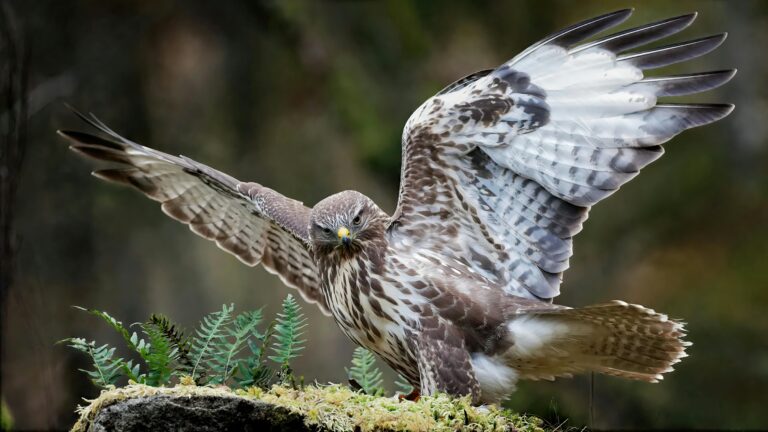
- Birds of prey (general): many start early (late winter to spring) with long chick-rearing periods; keep well back from known sites.
- Swallows and house martins: generally late spring and summer, linked to their return from migration; nesting around buildings is common.
- Swifts: summer nesting after arrival; they rely on access to suitable roof spaces, so building work timing matters.
- Seabirds (auks, gulls, gannets and others): spring arrival and incubation, with chick-rearing through summer at colonies.
What counts as a nesting sign? (and how not to accidentally disturb a nest)
You don’t need to see a nest to know breeding is happening. Strong nesting signs include: an adult carrying nesting material (moss, grass, twigs) into the same spot; repeated food runs with insects or caterpillars; a consistent flight line to one hedge or reed edge; adults swapping over discreetly (one slips out as another slips in); and behavioural warnings like alarm calls or distraction displays.
If you think you’ve found an active nest area, the safest approach is simple: stop and watch from where you are for a minute or two. If the bird delays, calls, or changes behaviour, you’re too close—take a few steps back, choose a different angle, or move on. Avoid trampling vegetation to “confirm” a nest, and never handle nesting material, eggs or young.
UK law and good practice during nesting season
In the UK, nesting birds are protected. In general terms (and without this being legal advice), it’s illegal to intentionally take, damage or destroy an active nest or its eggs. For certain species and in some situations, disturbance at or near the nest can also be an offence, and many protected sites have additional rules to reduce impacts during breeding.
Good practice for birdwatchers and photographers: keep to paths and hides, avoid using playback near breeding areas, don’t publish precise nest locations of scarce or sensitive species, and be cautious with drones (they can cause stress or colony panic). If you’re out with a dog, use a lead near hedgerows, dunes, heathland and waterside vegetation in spring and summer, where nests or fledglings may be close to the ground.
How weather and location shift the calendar
The UK nesting calendar is flexible. Mild winters can bring earlier territory behaviour and earlier nest building, while a cold spring can delay laying and reduce early success. As a broad pattern, nesting often starts earlier in southern and urban areas and later in northern England and Scotland, with upland sites typically behind lowlands. Treat this calendar as a planning tool, then fine-tune it by watching local conditions: when insects peak, when leaf cover arrives, and how quickly birds switch from singing to food-carrying.